Apart from Zuckerberg’s almost suspiciously alien features, the anniversary of Facebook
leaves a deep, unsettling fear, rooted much more closely in the real world. It reminds one of
both the ominous roots and reign of the company. From stealing a multi-billion dollar idea in
college, to casting someone out from your company, Zuckerberg shows an almost inhuman
desire to get ahead at any cost.

One might think this is only natural; after all it is simply business. But Zuckerberg’s actions
have formed the foundations of how Facebook operates. As ruthless as he is, the principles
have transferred over and made Facebook as infectious as it was in its prime. Facebook
used to be the social media, now it is almost obsolete. Today, Facebook is merely a data
mining source disguised as a social networking platform. As Illing, Turner, and Wagner
point out, the main functions of Facebook have changed the notions of business, finding
family, and privacy. It has become purely obsolete amongst my generation. Most of my
friends rarely use Facebook, and when they do it’s to keep in touch with extended family,
work friends, or other acquaintances at best. Facebook itself has become a method of
information sharing rather than recreation.
When Facebook first hit the scene, it was seen as revolutionary, and as fun. Now it’s nothing
more than something used to keep in touch. With the evolution of social media, (i.e.
Instagram, Snapchat, Twitter) Facebook seems a lot less cutting edge. After all you can
merely post pictures, (Instagram) write your thoughts, (Twitter) or keep up with friends
(Snapchat.) So one has to wonder… what’s the point of Facebook, and why hasn’t it died
out? As Beck points out, Facebook is where relationships “go to never quite die.” As in,
someone you might have naturally lost touch with is now connected, forever. This seems
useful and also a little unnerving. If relationships never die out, are they still as real and
valuable as they once were? Social media skews relationships so they are almost
unrecognizable. Recently, my friends and I were discussing the topic of following someone
on social media. One friend pointed out that he expected a follow back from people he knew
in real life, because of the fact that they know each other. Is this what social media has
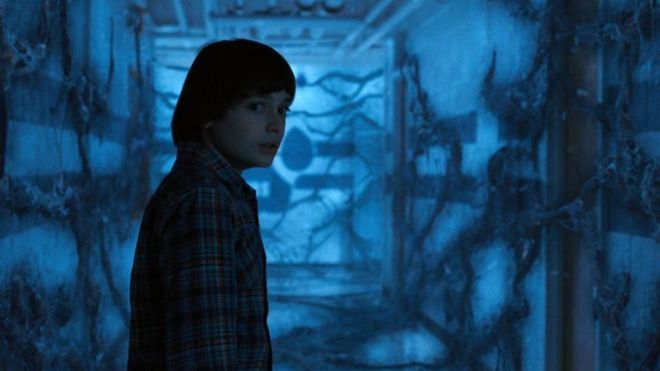
become, merely a link between the real world, and the metaphoric Upside Down of the
Internet?
This also relates to the idea of communications as discussed in Rodman’s Mass Media in a
Changing World. If the way we communicate varies, than so must our forms of expression,
and in this case, social media. No wonder Facebook seems outdated. Do we use the same
slang, word choice, or even trends as we did 15 years ago? Look at the trajectory of emojis
and emoticons over the years. The grammar of text also conveys various different things.
I might not choose to text my manager “LMAOOO cryinggg” with several expressive emojis
as I would to a close friend. Even the ways in which we express emojis convey our
emotions. If someone replies with short text messages, or even uses proper grammar, the
delivery of the message is completely different. How is “K” different from “Ok” and even
more different than “Okay?” And how have these differences formed over time and
generations? How might a 45 year old see this versus a 15 year old?

Ultimately, Facebook has changed in use and intent over its 15 year span. Whether this is
good or bad depends on so many factors, such as age, internet use, and personal opinion.
To me, Facebook has changed use over time to become more sinister in function. It is now
a mere ploy to gather information in hopes of turning a profit. It also festers unhealthy
relationships that once might have naturally formed or disintegrated. Social media generally
portrays relationships through rose-colored glasses. How can one navigate such
relationships through social media sites such as Facebook, or must the sites themselves
change?
 Confessions of A Com Major