Original post: https://confessions.tech.blog/2019/02/11/facebook-genius-or-sinister/
A blank screen. My cursor hovered around the blank site until it froze upon the iconic “Facebook” logo. As the harsh, blue computer light shined on my prepubescent face, I paused in anticipation. My first experience with Facebook was in my early stages of middle school. Like all fond childhood memories, it arose out of peer pressure. The peak of my Facebook use was in the 7th grade. I only kept my account for about a week, until I had added about 12 people, before I stopped using the site. I could never get invested in social media in the way I had seen my peers do so. Even today, it takes a willing effort for me to post on social media. The reasons are rooted in the seemingly wastefulness of the medium, coupled with my own thoughts of doubt. Will this get likes? Does it show who I am beyond a screen? Social media is so daunting for most because it represents change, something most of us fear.
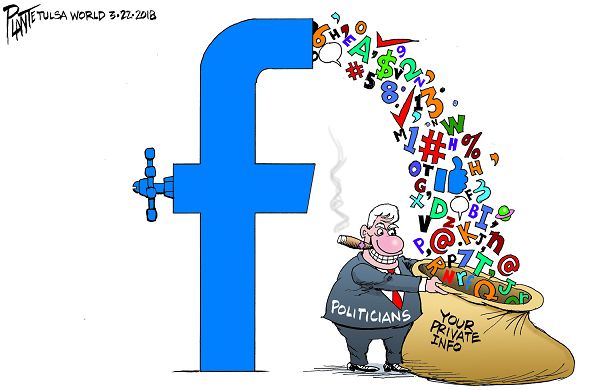
Facebook, Instagram, and many other social medias themselves have seen a drastic change over the years. The commercialization of the sites have led to changes in the means of operations as well as user experience and interface. What appears to be an increase in the site’s quest for more “meaningful connection” is more increased monetization. In fact, the first quarter of 2018 led Facebook to earn 13.2 billion dollars in profit, totaling a 42% increase yearly. (Hootsuite, 2018) To many, this varies from the public perception of Facebook. It has been seen as being on the decline yearly. How is this possible then? Perhaps, this has to do with the speculated data mining and selling of information Facebook is charged with. So, is Facebook really on a decline, or is it nothing more than a mere facade?
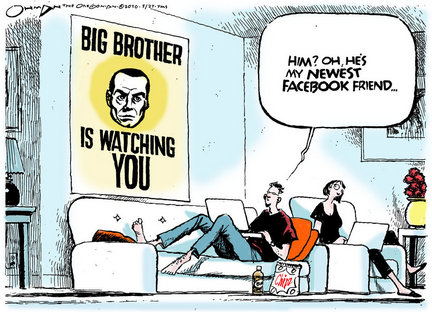
In today’s eerily postmodern era of validation through social media, it can sometimes feel like likes and comments are sometimes at the center of human interaction. The presence of Facebook is almost as looming as it is terrifying. Facebook may not seem very insidious at first; after all it is the prime social media choice for those not quite connected to the digital world. Within the past 7 years, Facebook use has doubled for those 65 and up. (Hootsuite, 2018) It is a means of connection for family, parents, and even grandparents. More and more might have been drawn to it because of familial suggestion, peer pressure, or colleagues at work. But, just how relevant is Facebook in 2019? Does it still hold the same weight it did when it first hit the scene in 2009? Social media itself, like almost all forms of media, is cyclical. Every form of media is recycled from ideas past. What more is Facebook than MySpace 2.0?
Even in forms of “old media” there has been forms of vicious competition, rebirth, and ultimately, innovation. As one medium progresses each platform must innovate in order to keep up. The struggle between today’s social media platforms is reminiscent of the struggle between newspapers and radio in radio’s inception. As George Rodman points out in Mass Media In a Changing World, the Biltmore Agreement was forced upon radio stations by newspaper tycoons. The agreement stated that radio broadcasts T.V. was not seen as a threat until radio stations saw the amount of advertising potential. Radio saw opportunities to pair up with television as a means of self-saving and they took it. Eventually, newspaper began to die out. One may argue the same is happening with T.V. as now people mainly rely on social media for their news. However, this perspective is very subjective, as it does not account for the many Americans who still rely on their T.V. for news and updates. This is especially true for older Americans and those without smartphones. After all, 41% of Americans over 65 or older use Facebook (Sprout Social, 2019), a whopping amount compared to other social medias.
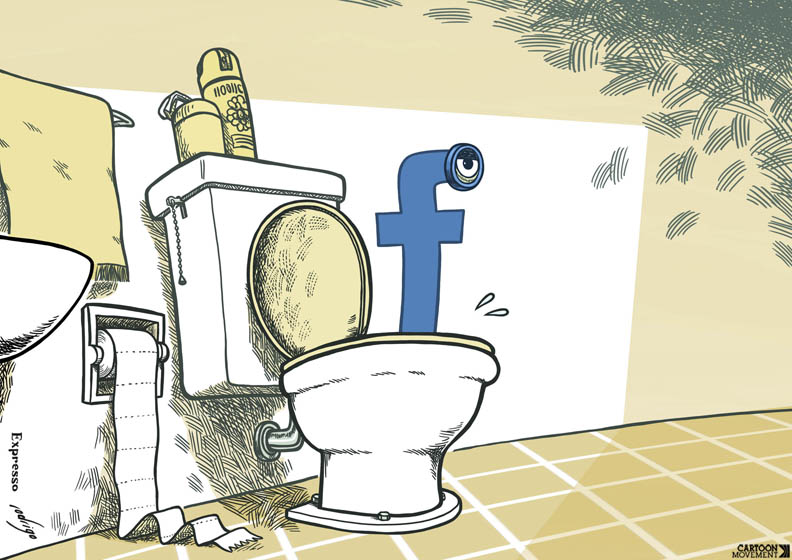
Facebook itself is becoming obsolete. In fact, everyone in my social circle connects through Instagram, a new monolithic beast in its own right. However, my mom’s generation, and all of my extended family, use Facebook as a way to stay connected. Almost 68% of Americans use Facebook, despite only half of American teens being active on the platform. (Pew Research Center, 2018) Facebook is a way to keep to know how someone is doing without having to reach out. Before I thought this was bad, and almost wrong. Why not reach out to someone to check in on them? But now I see why. Life gets in the way. People get lazy. They forget. In the past month alone the amount of belated midnight “Happy late birthday!” texts I’ve sent is scary. Facebook acts a tool in order to manage your life. It is convenient. On the surface Facebook is convenient, it organizes and allows you to stay in touch with family. However, what are the deeper implications behind the sinister social media? Is it able to be so convenient because it is subversively connected to all aspects of our life?
Almost every technological innovation of the past 20 years has been a form of recycled media developed in the 90s. Look at Tim Berners Lee’s World Wide Web, and now Google. So why was Facebook so explosive? It didn’t reinvent the wheel. But, it did learn from previous social medias and make itself better. It was MySpace for everyone. Facebook and almost any social media keep relationships alive in an almost eerie way. As Julie Beck points out in her article of the same name, Facebook is where relationships go to “never quite die.” (Beck, 2019) Facebook itself has pioneered a whole new navigation system for relationships, friendships, and family. In today’s time social conventions near hinge on social media dos and don’ts, what happens when you break up with someone? Do you unfollow them, like their pictures, or even watch their stories? Facebook’s “relationship status” singlehandedly affected the way we think about relationships in the digital world. In fact, 1/3 of all divorce filings contained the word Facebook in the year 2011. (ABC, Divorce Online, 2012) Is Facebook so ingrained in our subconscious that affects even the deepest of bonds?
Facebook may seem so foreign to me because I never really used it. In middle school, Facebook was the social media, but was quickly replaced by Instagram as I reached high school. High school was when I started to get into social media, so I skipped Facebook and got straight into Instagram. The further away I’ve gotten from Facebook, the more of a mystery it becomes. Facebook has become an innovator in the world of data mining and profiting off of their users. How can they sell our information, yet no one notices, or even cares? After all, we all value our privacy. If someone invaded our home in order to sell all of our belongings, we’d be up in arms. So how is this different? Through all the controversies and questions there are concerning Facebook, this one is the most puzzling. Why are people so indifferent to a threat against personal safety?
The only thing that really changed my perspective on Facebook was when I went on a trip to LA with my mom. I was “documenting” the experience on Instagram, Facetiming my friends, and so forth, while she was posting on Facebook. Through Facebook, she was able to reconnect with her college friends and actually met up with them back in New York. All of her friends were commenting on her posts, and she actually got back in touch with people who she hadn’t spoken to in years. Facebook served as a tether pole to her old life and sell without being overbearing.
Behind the large amount of Facebook controversy is Mark Zuckerberg. Equal parts terrifying and mystifying, Zuckerberg holds the secrets to Facebook’s success. Why was Facebook so popular? What exactly made it so explosive? Zuckerberg has exactly the cutthroat nature it takes to succeed in today’s climate. Amid accusations of data mining and selling user information, Zuckerberg remained calm and impartial. Is this a matter of ethics or business? Is it possible to Zuckerberg, and for our society, to sacrifice our morals in order to make money? What is there to gain from Facebook’s climactic success, and ultimate demise?
 Confessions of A Com Major