A Reflection on “Facebook… Genius or Sinister” 3 Months Later

Original post: https://confessions.tech.blog/2019/02/11/facebook-genius-or-sinister/

A blank screen. My cursor hovered around the blank site until it froze upon the iconic “Facebook” logo. As the harsh, blue computer light shined on my prepubescent face, I paused in anticipation. My first experience with Facebook was in my early stages of middle school. Like all fond childhood memories, it arose out of peer pressure. The peak of my Facebook use was in the 7th grade. I only kept my account for about a week, until I had added about 12 people, before I stopped using the site. I could never get invested in social media in the way I had seen my peers do so. Even today, it takes a willing effort for me to post on social media. The reasons are rooted in the seemingly wastefulness of the medium, coupled with my own thoughts of doubt. Will this get likes? Does it show who I am beyond a screen? Social media is so daunting for most because it represents change, something most of us fear.

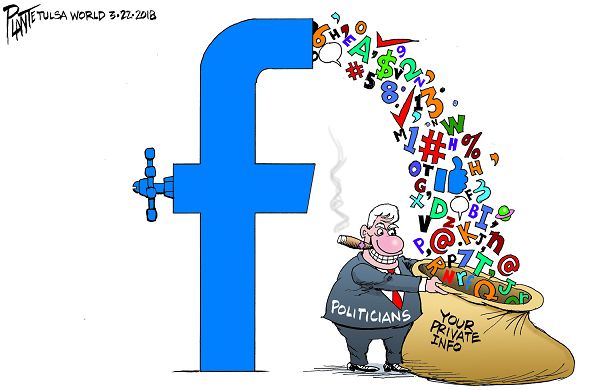
Facebook, Instagram, and many other social medias themselves have seen a drastic change over the years. The commercialization of the sites have led to changes in the means of operations as well as user experience and interface. What appears to be an increase in the site’s quest for more “meaningful connection” is more increased monetization. In fact, the first quarter of 2018 led Facebook to earn 13.2 billion dollars in profit, totaling a 42% increase yearly. (Hootsuite, 2018) To many, this varies from the public perception of Facebook. It has been seen as being on the decline yearly. How is this possible then? Perhaps, this has to do with the speculated data mining and selling of information Facebook is charged with. So, is Facebook really on a decline, or is it nothing more than a mere facade?
In today’s eerily postmodern era of validation through social media, it can sometimes feel like likes and comments are sometimes at the center of human interaction. The presence of Facebook is almost as looming as it is terrifying. Facebook may not seem very insidious at first; after all it is the prime social media choice for those not quite connected to the digital world. Within the past 7 years, Facebook use has doubled for those 65 and up. (Hootsuite, 2018) It is a means of connection for family, parents, and even grandparents. More and more might have been drawn to it because of familial suggestion, peer pressure, or colleagues at work. But, just how relevant is Facebook in 2019? Does it still hold the same weight it did when it first hit the scene in 2009? Social media itself, like almost all forms of media, is cyclical. Every form of media is recycled from ideas past. What more is Facebook than MySpace 2.0?
Even in forms of “old media” there has been forms of vicious competition, rebirth, and ultimately, innovation. As one medium progresses each platform must innovate in order to keep up. The struggle between today’s social media platforms is reminiscent of the struggle between newspapers and radio in radio’s inception. As George Rodman points out in Mass Media In a Changing World, the Biltmore Agreement was forced upon radio stations by newspaper tycoons. The agreement stated that radio broadcasts T.V. was not seen as a threat until radio stations saw the amount of advertising potential. Radio saw opportunities to pair up with television as a means of self-saving and they took it. Eventually, newspaper began to die out. One may argue the same is happening with T.V. as now people mainly rely on social media for their news. However, this perspective is very subjective, as it does not account for the many Americans who still rely on their T.V. for news and updates. This is especially true for older Americans and those without smartphones. After all, 41% of Americans over 65 or older use Facebook (Sprout Social, 2019), a whopping amount compared to other social medias.

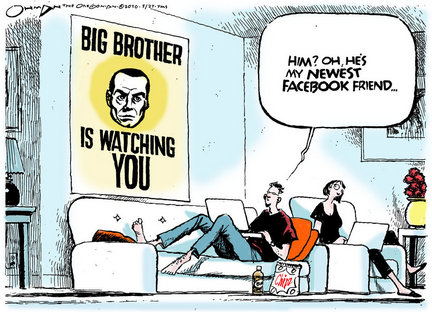
Facebook itself is becoming obsolete. In fact, everyone in my social circle connects through Instagram, a new monolithic beast in its own right. However, my mom’s generation, and all of my extended family, use Facebook as a way to stay connected. Almost 68% of Americans use Facebook, despite only half of American teens being active on the platform. (Pew Research Center, 2018) Facebook is a way to keep to know how someone is doing without having to reach out. Before I thought this was bad, and almost wrong. Why not reach out to someone to check in on them? But now I see why. Life gets in the way. People get lazy. They forget. In the past month alone the amount of belated midnight “Happy late birthday!” texts I’ve sent is scary. Facebook acts a tool in order to manage your life. It is convenient. On the surface Facebook is convenient, it organizes and allows you to stay in touch with family. However, what are the deeper implications behind the sinister social media? Is it able to be so convenient because it is subversively connected to all aspects of our life?
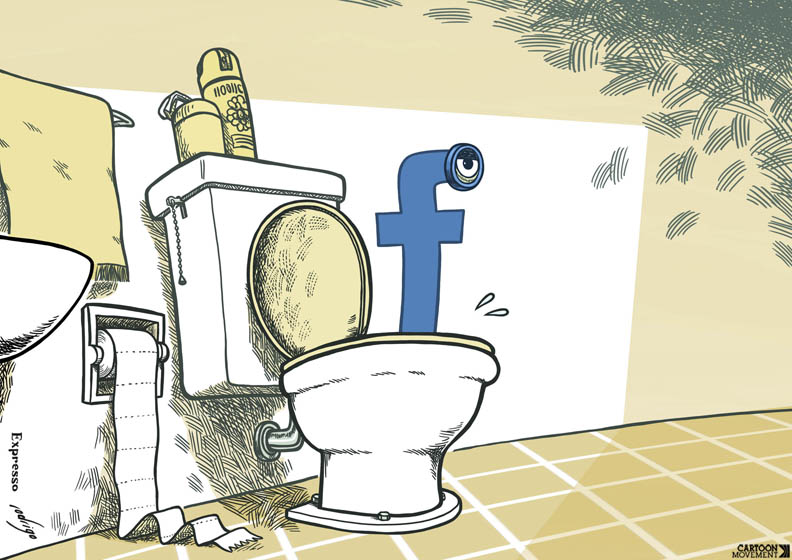
Almost every technological innovation of the past 20 years has been a form of recycled media developed in the 90s. Look at Tim Berners Lee’s World Wide Web, and now Google. So why was Facebook so explosive? It didn’t reinvent the wheel. But, it did learn from previous social medias and make itself better. It was MySpace for everyone. Facebook and almost any social media keep relationships alive in an almost eerie way. As Julie Beck points out in her article of the same name, Facebook is where relationships go to “never quite die.” (Beck, 2019) Facebook itself has pioneered a whole new navigation system for relationships, friendships, and family. In today’s time social conventions near hinge on social media dos and don’ts, what happens when you break up with someone? Do you unfollow them, like their pictures, or even watch their stories? Facebook’s “relationship status” singlehandedly affected the way we think about relationships in the digital world. In fact, 1/3 of all divorce filings contained the word Facebook in the year 2011. (ABC, Divorce Online, 2012) Is Facebook so ingrained in our subconscious that affects even the deepest of bonds?

Facebook may seem so foreign to me because I never really used it. In middle school, Facebook was the social media, but was quickly replaced by Instagram as I reached high school. High school was when I started to get into social media, so I skipped Facebook and got straight into Instagram. The further away I’ve gotten from Facebook, the more of a mystery it becomes. Facebook has become an innovator in the world of data mining and profiting off of their users. How can they sell our information, yet no one notices, or even cares? After all, we all value our privacy. If someone invaded our home in order to sell all of our belongings, we’d be up in arms. So how is this different? Through all the controversies and questions there are concerning Facebook, this one is the most puzzling. Why are people so indifferent to a threat against personal safety?

The only thing that really changed my perspective on Facebook was when I went on a trip to LA with my mom. I was “documenting” the experience on Instagram, Facetiming my friends, and so forth, while she was posting on Facebook. Through Facebook, she was able to reconnect with her college friends and actually met up with them back in New York. All of her friends were commenting on her posts, and she actually got back in touch with people who she hadn’t spoken to in years. Facebook served as a tether pole to her old life and sell without being overbearing.

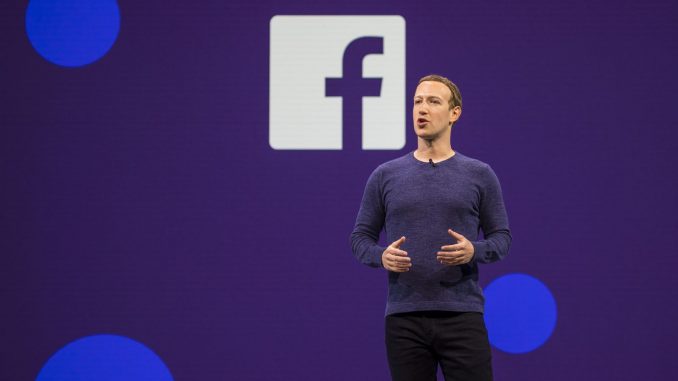
Behind the large amount of Facebook controversy is Mark Zuckerberg. Equal parts terrifying and mystifying, Zuckerberg holds the secrets to Facebook’s success. Why was Facebook so popular? What exactly made it so explosive? Zuckerberg has exactly the cutthroat nature it takes to succeed in today’s climate. Amid accusations of data mining and selling user information, Zuckerberg remained calm and impartial. Is this a matter of ethics or business? Is it possible to Zuckerberg, and for our society, to sacrifice our morals in order to make money? What is there to gain from Facebook’s climactic success, and ultimate demise?


The Use of Nostalgia in Film: The Eternal Sunshine of the Spotless Mind Extra Credit

Nostalgia is one of those things that is so difficult to define. It’s because it’s different for everyone. For some people it’s the smell of strawberries, others a song from the 80s their dad loved. Eternal Sunshine of the Spotless Mind tackles just what memory and nostalgia are in a world where both are optional. The year is undetermined, but science has caught up with the angsty sting of first heartbreak. Now people are able to surgically remove the memory of someone from their minds. After Joel learns his ex-girlfriend, Clementine, has undergone the procedure, he decides to have it done himself. The bulk of the movie comes from the surgery, where piece by piece his memories of Clementine are being removed. He remembers the good and bad times, and eventually realizes that the surgery shouldn’t be performed. Joel’s slow recount of every memory of Clementine act as a pseudo relationship of sorts. He idealizes Clementine to the point of delusion. He completely ignores the issues he and Clementine faced. I loved how this was done. Usually, the protagonist of a romantic comedy will try and “get back” the girl. Here, Joel does the same, but it is completely inverted. A common romantic trope was used, but flipped on its head. How often does this happen in a relationship? And if technology advances, does that mean that humans are intrinsically changed for the better? Are Clementine and Joel better off forgetting one another? The whole film uses nostalgia to ask the question of memory’s importance. Can we survive without the memories of loved ones, even if they tjey hurt? Or is it better to erase whatever hurts? The film answers this question with its use of the memory erasure itself. For the most part it is unsuccessful. It’s why Joel and Clementine meet in Montauk and why Mary, a Lacuna Inc. secretary, is still in love with Lacuna’s founder who she previously had an affair with. The procedure doesn’t work as well as it should. One may still remember brief moments or feel a connection to someone, even after the erasure process.
Ultimately, Eternal asks questions of fate and free will. Director, Michel Gondry says he imagines after the film, Clementine goes onto keep having Joel erased from her memory until she is an old woman. Again, this shows the procedure doesn’t work. Yet, people are so desperate to erase pain, they don’t care. Are Joel and Clementine fated to be in a cyclical, miserable fate? Are they doomed to repeat their mistakes into eternity? One might argue that the procedure itself is more harmful, as it completely erases the basis of what it feels to be hurt, or to feel in general. How can you learn from your mistakes if you forget the mistake itself? Personally,  I was disappointed when I read this. The end of the film is heartbreaking and beautiful. It fulfills the premise of the film. Joel and Clementine find each other, and recognize one another. They should be happy. There is a beautiful moment where Joel asks Clementine, so what? So what if they don’t work out, why not try again, and enjoy the memories? But with Gondry’s comments in mind, I wondered just what would happen. I think Joel and Clementine would try again at a relationship. Maybe they’d work out, but probably not. Clementine would get the procedure again just to keep repeating the cycle. Erase Joel. Meet in Montauk. Fall in love. Break up. Repeat. For me, this completely changes the film. Before I thought it was beautiful and romantic. Now I think it’s sad and melancholy. It’s filled with nostalgia, and what-ifs. My favorite character was Clementine because she seems so real. She challenges the trope of the damsel in distress so often seem in romantic comedies. She completely flipped the manic pixie dream girl trope on its head. In the library scene, she tells Joel his preconceived notions are wrong and she has her own agency. Eternal Sunshine pairs a smart, innovative script with sincere acting to form a work that questions humanity itself. It resonates with me so much because I often wonder about the issues brought up in the movie. It is so human because it touches on the desire to want to be loved and remembered. Ultimately, Eternal asks what is nostalgia, and how does it operate?

Evolving Journalism: The Case for Social Media in Modern Journalism

Who exactly are the gatekeepers in journalism’s ever evolving ways? Who keeps the integrity of a publication, piece, or

journalist themselves? These are all questions examined in both George Rodman’s text as well as Goodnight and

Goodluck and The Most Dangerous Man in America. Both films revolve around historic figures within the journalism

community. Both figures also serves of figure heads of the watchdog ideology we learned about. A watchdog is an

agency or person who takes the place of “checking” an organization, business, or government to make sure they are

remaining honest. Several similar figures may be remembered in recent history. Both stories reminded me of Edward

Snowden, an American whistleblower and ex-Intelligence worker. Goodnight and Goodluck tackles exposing

McCarthyism, which is arguably one of the most controversial times in recent American history. McCarthyism is so

controversial because it was the antidote to communism. It was seen as perfectly acceptable in the day, although it

vilified innocent Americans. CBS news anchor Edward R. Murrow and producer Fred Friendly expose McCarthy’s

underlying actions. The film is interesting because it also shows the pressures Murrow and Friendly face from CBS

itself, as well as audience reception. The film shows traditional journalism’s roots, and inception. It shows the way an

exposé used to occur, and is valuable to look over as the media progresses.

The Most Dangerous Man in America shows Daniel Ellsberg exposing the Pentagon Papers. Ellsberg’s position as a

military strategist drastically helped him have the positionality to expose the papers. This is similar to Snowden’s

position as an insider. However, both are different to Murrow, as he is a member of the press who exposes a

government injustice. This brings up the question, how does whistleblowing or exposing differ from the inside versus the

outside? How trustworthy is a source depending on its origin? Personally, I think that a source may be deemed more

trustworthy to the public if it comes from a media/news source, whereas a government insider may be more informative.

To summarize, the public may understand a news anchor more, but a government official may be more informative.

This is apparent in nearly every celebrity scandal. The information is public knowledge for quite some time, but never

goes viral, until a movie, article, or some other form of media is published. It’s part of the reason Bill Cosby is viewed

much differently than Woody Allen. Both have committed various heinous acts, but Cosby’s have an explosive

docu-series behind them. Perhaps, it’ll take a film or TV series for Woody Allen to be exposed. So, why is the America.

public like this? Why are we only willing to “cancel” someone when it goes viral? Is this simply cancel culture, or does it

reveal a deeper problem? Perhaps this is part of the human condition in a way. As humans, we are more likely to be

invested in something when it is formulated as a story. We are more interested, excited, and invested when there are

characters and events. It’s why stories blow up, like Cosby’s did, when paired with a movie or visual medium. R. Kelly

is just another example of this. His victimization of young black women was widely known, but not really spoken about,

until a docu-series was made. How has society shifted over time to accommodate for this change? And how, if so, was

Ellsberg responsible for this?

Evolving journalism is the transition of journalism over time with the development of technology, evolving practice, and

new new stories. Journalism must evolve with the times in order to remain newsworthy and ground breaking. In recent

times, we have seen the evolution of news within the personal sphere. Twitter has exploded as a means of news. Some

of the most viral occurrences- celebrity deaths, storms, and even mass shootings are all usually reported on social

media. Generation Z may find out most of their news through Twitter. How does this change the news itself? How might

the spread of news change even more in the future? As news spreads more rapidly through social media, its impact

varies greatly. The news itself almost seems regular and ordinary. However, this mode of news does make it much

more convenient. I have heard of several mass shootings through Twitter. Each time, the reaction has been different,

usually depending on the incident itself. The Parkland and Pulse shootings were the two I remember the most clearly. It

was interesting to see other people’s reactions. People my age, that I could relate to, not just static news anchors.

Ultimately, Twitter is the paramount of modern news and evolving journalism.

Net Neutrality: The Most Pressing Issue of Generation Z

Net neutrality is one of the most important, yet ambiguous debates of our generation. The Internet is something that impacts almost everyone from Generation Z to Millennials to Baby Boomers. Net neutrality is essentially the idea of the “free internet,” or the idea that information cannot be promoted or ignored based on providers’ personal biases. (Vox news) However, this idea saw a huge shift under the Trump administration. The so-called “Cabelization of the internet” took over, as ISPs (internet service providers) saw a huge privatization of their networks.  ISPs were able to charge extra based on the amount of data used, as well as promoting any information or streaming services they wanted. This leads to a huge abuse of power, and monopolization.

Net neutrality allows for people to innovate and change the Internet, as well as develop new  technology. As one source mentioned in the Vox video, had it not been for net neutrality, we may have all been updating our MySpace right now. A world without Facebook seems almost too good to be true, but think about all the ways society has improved because of new social medias. Instagram has sourced a huge uprising in photography and social media influencers. Twitter has seen a huge shift in the way we think of journalism, and Youtube and Vimeo have made filmmaking accessible to the masses. Net neutrality is so important because it shifts how the following generation accesses their information. Let’s be honest, most people check their phones for news nowadays. If news and information isn’t accessible because of monopolization, then there is a rude awakening in store for the millions of people who depend on the internet for their news.   

How does political policy impact the information it dictates? Is it really in provider’s best interest to have such a large stake in what they are providing? Think of it this way, if a lemonade company was in charge of sourcing the lemons it used for its particular lemonade recipe, what holds the company itself accountable for the quality of the lemons they purchase? Who’s to say Minute Maid won’t go for the cheaper lemons to cut overhead costs? How would this hypothetical change if the FDA suddenly allowed companies to omit their packaging labels on products? In this example, it is a near given that Minute Maid will always use cheaper ingredients in order to cut their costs. It is why Minute Maid uses high fructose corn syrup as a sweetener, while an organic brand might use agave or brown sugar. For lemonade, this is a fair game. The FDA is mandated to regulate the ways in which Minute Maid operates. The customer has a variety of choices. But in terms of internet? With a limited number of suppliers, all incentivized by the same policies and overheads, who can “check” them? Who acts as a watchdog when the government itself has an agenda? If the FCC eliminates net neutrality then who’s to limit ISPs power and how much they charge? In 2005, for example,the FCC dictated that ISPs are not common carriers, allowing multiple companies to bundle together to form the mere five we have in place today. This limits the number of choices consumers have. Almost ⅔ of Americans live in an area with just one high speed internet provider to choose from (2016 Broadband Report, FCC, Vox) If the Internet surges in price, or lowers in quality these individuals have little choice. They can either pay, or have no Internet, is this even a choice?

Image result for net neutrality political cartoon

Equal accessibility is the cornerstone of net neutrality. It aims for consumers to be able to have a free choice between many options. It also allows newer companies to have a fighting chance. Without net neutrality, what we’re starting to see, is an abundance of vertical and horizontal integration. This means companies bundling together expanding both in their field and in others to make more money. For example, Verizon may absorb a local New York TV station, and add to its sizable TV network. Then, it moves into streaming services. Through its expansive hold in TV and Internet, it promotes its own streaming services and slows down others. Therefore, Verizon promotes itself (because of the loss of net neutrality) and continues to make more money by shutting down its competitors. Net neutrality is essential to our society as we know it. It promotes healthy competition, low prices, and fair policies. The way we create, learn, and live depends on a free internet, like it does a free press. The FCC must restore net neutrality in order for the public to remain educated at a fair price.

Unproductive Seasons 3 and 4

Unproductive  seasons 3 and 4 chronicle the fictional campus of BC, a commuter college. The show’s main hub is

around the fictional radio station of KBC. Season 3 and 4 have two different protagonists. 3 focuses on Roxy Andrews,

an outspoken student determined to find the truth, while season 4 centers around the meek and shy Emily. In season 3

Roxy struggles to keep her show honest while her show runner tries to make it more digestible for the masses. This ends

in a climactic fight where Roxy exposes the head of the soccer team, who is alleged of sexual assault. Personally, I didn’t

really connect to Roxy as a character. All her decisions seemed brash and rushed. She seemed so ready to give up

everything for a simple radio show. She was ready to get expelled, burn all her personal relationships, and more.

Perhaps I didn’t connect with her because I felt like she didn’t really grow as a character, she simply stayed the same for

the majority of the season. She started off as independent and outspoken and stayed that way. She didn’t really face any

consequences that weren’t fixed within a couple beats. Maybe I didn’t connect with Roxy because she didn’t seem as real

as other characters. She was a martyr, strong and unemotional to the point of being almost two-dimensional. Roxy seems

almost like a plot device, a writing instrument than a person.

At a glance, season 4 seems much more refined than season 3. It contains many more subplots and expands on characters

in a way season 3 didn’t. Perhaps this is because the characters were established previously, but they read as three-

dimensional and as real people now. Emily takes shape in a way she didn’t before, she is outspoken and opinionated. We

also learn more about her, and are actually interested in her outcome. We’re invested in her character’s romantic subplot,

and whether or not she will find her voice. The characters seem much more familiar with one another. They’re

roommates, so their investment in one another seems much more realistic. Additionally, Emily feels more likeable than

Roxy did in the previous season. We actually see her grow, and her personal relationships with her friends, classes, and others enrich her.

Gattaca and Pump Up the Volume

Cheesy sci-fi thriller. Angsty 90s politically charged Christian Slater in his prime. Gattaca and Pump Up the Volume are

two films circa the 1990s that are two prime examples of the power of film. Gattaca was almost revolutionary for its time.

It sparked a huge debate on eugenics, genetic cloning, and other modern, controversial scientific procedures. Pump Up

the Volume is similar in the fact that it drives home a clear, identifiable message. It shows the power of media and youth,

and how explosive both can be when combined.

Gattaca stars Ethan Hawke and Uma Thurman as Vincent and Irene. The film is dated, and serves almost as an artifact

of the 90s themselves. Something that interested me was that, upon further research, I found out the film essentially

flopped at the box office. It lost almost 20 million dollars. Its total domestic gross was 12.5 million dollars, while the

budget closed in at 36 million. This speaks to the film’s public reception in its day, although critically it was a success.

Rotten Tomatoes and Roger Ebert (basically the father of modern film criticism) both hail the film as successful,

thought-provoking, and good. So why is it that the dollars were simply not there?

Maybe it has something to do with the fact that sci-fi’s come up was in the 90s. Think of The Matrix which was a success,

but almost the first of its kind. Although other sci-fi was popular and pretty much did well at the box office, was the

audience there? Today sci-fi and superhero movies appeal to pretty much everyone. Marvel and DC know the popularity

of their products, and market their films in order to appeal to a wider audience. This is called distribution and publicity.

Almost every studio does this because it’s smart. If more people are represented in a movie, more people will want to see

said movie, which means more money. Yes, film is an art form. But it’s also a business. A director can make the most

poignant, moving film, but with no distribution or marketing, it’ll flop. Even a film with enough advertising, and enough

marketing will sometimes flop. Sometimes good movies do really bad, other time bad movies do really good. Gattaca is

a good movie. Is it dated? Yes. Does the script sometimes feel choppy or brash? Sure. But the message of the film is

important. It set the trail for similar movies today that deal with the topics of social issues within film. The film also ends

on an almost cynical, quite existential point. Vincent muses on the state of humanity, proclaiming he feels more human

leaving Earth, than he ever did on it. Is one to believe that the film chronicles his life, that he simply dies after the film?

Or is it perhaps a remembrance on the state of humanity itself?


Pump Up the Volume stars Christian Slater in his prime as a introverted high schooler by day, and a daring radio host by

night. It similarly addresses issues of humanity. Although its premise is in a teenager’s own form of self-expression:

a nightly radio program. It deals with censorship of the media and of oneself. It addresses something we have particularly

covered in our class so far: the so-called “Watchdog” of the government: the media. But what happens when that watchdog

fails time after time? What happens when the people themselves must check both the media and the government. This is

the premise of Pump Up the Volume. Similarly to Gattaca, the film was not a financial success, instead it tanked. But the

reviews were unilaterally good despite this. It gained an almost cult following over the years, and was revered as an

underground classic. The film reminded me of 1984 meets Heathers. The tone is sharp and funny, and proves to be an entertaining

and thought-provoking watch. The end ignites the viewer to root for social change and upheaval. The whole film deliberately

conveys a specific message. Ultimately, Pump Up the Volume and Gattaca both are rooted in social change, in revolution.

Even though financially they were not successes, they remain part of the pop culture canon of youth and rebellion.

The Current State of Journalism and Media Coverage

Watergate. Me Too. Black Lives Matter. Bill Clinton and Monica Lewinsky. These are arguably some of the most influential stories of the past 50 some odd years. All originated from different social climates and journalistic roots, but share a common theme. Without being the precise right time, these stories would never have taken off in the way they did.

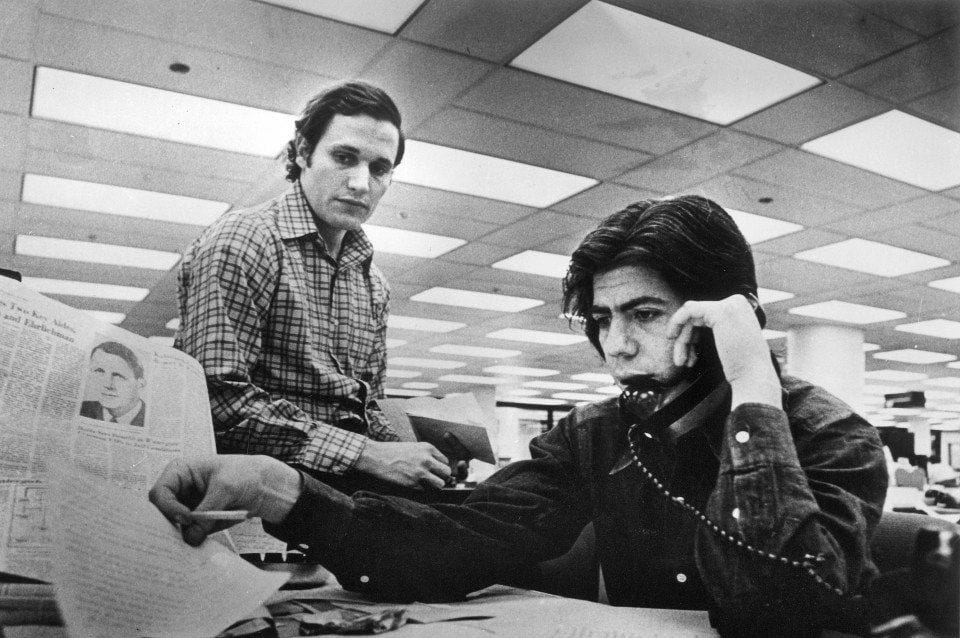
Woodward and Bernstein: Lighting a Fire is a documentary film chronicling the investigative journalism that took place behind Watergate in order to expose it. Carl Bernstein and Bob Woodward are hailed as “guardians of the American public” who pioneered investigative journalism as a field. The film reflects on their actions as professionals and how their choices, if made today, may have had serious consequences. One source says “If Watergate happened today it wouldn’t have been exposed.” This was shocking to hear… until I realized today’s Watergate hasn’t been exposed. Lighting  a Fire posits that if Watergate happened today, it would be covered up by officials. Woodward and Bernstein would have been subpoenaed, forced to reveal their sources, and then be held in contempt if they refused to do so. Following those events, the story would be buried and never see the light of day. So who’s to say that isn’t happening today?

Bob Woodard and Carl Bernstein

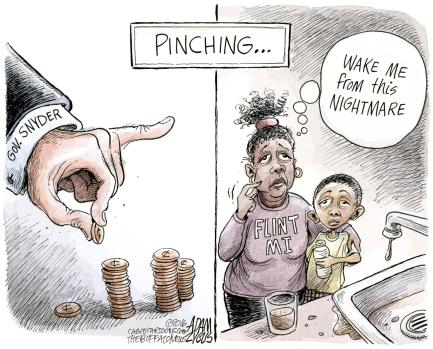
Looking beyond what may or may not come to light about today’s post-modern, almost apocalyptic state of politics, there is concrete evidence of a huge scandal being ignored. Its name: Flint, Michigan. We all know about Flint. We’re all aware. And yet, it has been ignored for years on end. The reason is because of the media’s interest in “self-censorship” wherein they don’t publish stories they don’t think will receive traction. (Lighting a Fire) John Oliver also touches upon the media’s click-hungry motives. If they see a story that is groundbreaking, but not receiving media attention, they won’t publish it. As the gatekeepers to newsworthy information, it is essentially the media’s job to inform the public of what’s going on. If our news is incentivized by our interest and our money, true news will never get made. The simple truth is that people only willingly read what interests them. Usually that isn’t high school kids dying or the bombing of countries overseas. Just because people’s interests are grounded in celebrities, adorable animals, or the latest trends, doesn’t mean they don’t have a right to know about dying children, war, and bombing. It means the media has a right to inform regardless of the financial blowback.

John Oliver showed a skit based on what can now be considered the new newsroom. A comic battle ensues between the outing of the Boston City Hall versus a cat raccoon (or is it raccoon cat?) The skit, as funny as it is, is based in reality. So many news outlets choose to cover frivolous stories that don’t inform us much of anything, but are interesting and will garner clicks and views. So is this really news? Is this investigative journalism as in the likes of the Watergate era? One can only wonder how far we’ve come over the years, especially in investigative reporting. How has attention span, media coverage, and investigative journalism progressed since Woodward and Bernstein? Would they be proud looking upon the journalists of today?

The Chillingly Surreal “A Night at the Garden”

I had never heard of “A Night at the Garden” before this week. Upon watching this seven

minute short, I was baffled as to why. The 2019 Oscar Nominated short, directed by

Marshall Curry, is as chilling as it is informative. I was sucked into the film within seconds.

It weaves together American nationalism, the German Nazi regime, and the socio-political

culture clash of the two. To see these two worlds collide was shocking to me. Somehow, I

knew that America had its own racist and xenophobic past, but intertwined with Nazism?

That was a shock. My first instinct was to contextualize what I was seeing. The whole film

is purely made from unnarrated archival footage, so context is key. To find out the film is

set in the late 30s in New York was a shock. Additionally, to see 20,000 American citizens

engage in behavior so racist, xenophobic, and nationalist, especially for a country they’re

not even in, was baffling to me. I wondered about the kind of Americans portrayed in the

film, those so attached to a country they didn’t even live in. They were moved by a speech

condemning Jews. In New York, of all places, a hub for so many Jewish people; a haven.

Without any context, this film appears almost as German propaganda. We see a young,

Jewish protester mocked, humiliated, and dragged away which is disheartening to say the

least. This film is intended to shake one’s perception of America, and to connect it to the

present. One is reminded of America’s own gruesome racism and just how recent it is.

The protagonist of the short, Fritz Kuhn, mentions a “Jewish controlled press.” What he is

loosely referring to can (falsely) be identified as an oligopoly, where a small amount of

companies run the media. Kuhn’s foundational argument is that the media is solely

controlled by these Jewish run companies and that they spew “fake news” that profits them

only. Essentially, this is thinly veiled racism. This relates also to agenda setting, which is

where the media decides what is and is not important, therefore feeding the general public

what is deemed necessary. If there really is a “Jewish controlled media” then according to

Kuhn, all news is biased, false, and should not be listened to. Instead, German propaganda

is the only reliable source. Margaret Talbot’s “Revisiting the American Nazi Supporters of

‘A Night at the Garden’” links the film’s central topics to the current state of American

affairs. The concept of “fake news,” one dear to Trump is one that is deeply rooted in “A

Night at the Garden.” How is “Jewish run media” so different than the so-called “liberal run

media” from the likes of CNN and MSNBC, according to the Trump administration? The

film’s perverse use of American iconography such as the American flag and images of

George Washington do little to stymie the thin line between nationalism and racism. Kuhn

explicitly says “Our government must be returned to the ideals of the American people who

founded it,” creating a direct link from America to the Nazi party and ideals. Similarly,

Trump has shown his own biases towards support of racist parties and candidates. As Talbot

states, one so-called advantage to the living through the Trump administration is that “it has

compelled a reckoning with aspects of our country’s past that, for a long time, many

Americans preferred not to acknowledge.” Although this is true, it is an almost pessimistic

statement and ideology. Is it, in fact, true that in order to face our past, we must have to had

such an ineffective president? In order to admit, as a country, and as a people, our

problematic past, we must have to enter more trauma into our historic canon? To summarize,

Americans should not finally come face to face with our ugly past because of a horrific

leader. We must always strive to remember fully, no matter what the conditions.

“Fake news” is a newly coined term, that represents years worth of ideology, as exemplified

earlier with Kuhn. Gatekeeping is an old term, and one that rings in many’s ears in today’s

modern buzz. From the fifth estate of modern journalism to Twitter reports of news, how can

one filter and cut through the noise? Gatekeeping is a news practice that has been in use for

tens of years. It is when an agency (a news organization or corporation) decides what

information is important enough to spread and report. When I first heard about gatekeeping,

I was furious. Enraged. Passionate. How can an agency with so much power, and so many

underlying angles be omnipotent enough to decide what the public deserves to know?

How much of a role does the media have in our perception of America and of our news? Do

we view Trump the way we do because of the media we consume? This is on fact very true,

and called selective exposure and perception. Someone who watches CNN will view him

very differently than someone who watches FOX. We are influenced by what we choose to

watch, and our own implicit biases while watching. We must hold the gatekeepers

themselves accountable for what they have done, and be the watchdogs for the information

we truly want to hear about.

Facebook… Genius or Sinister?

Apart from Zuckerberg’s almost suspiciously alien features, the anniversary of Facebook

leaves a deep, unsettling fear, rooted much more closely in the real world. It reminds one of

both the ominous roots and reign of the company. From stealing a multi-billion dollar idea in

college, to casting someone out from your company, Zuckerberg shows an almost inhuman

desire to get ahead at any cost.

One might think this is only natural; after all it is simply business. But Zuckerberg’s actions

have formed the foundations of how Facebook operates. As ruthless as he is, the principles

have transferred over and made Facebook as infectious as it was in its prime. Facebook

used to be the social media, now it is almost obsolete. Today, Facebook is merely a data

mining source disguised as a social networking platform. As Illing, Turner, and Wagner

point out, the main functions of Facebook have changed the notions of business, finding

family, and privacy. It has become purely obsolete amongst my generation. Most of my

friends rarely use Facebook, and when they do it’s to keep in touch with extended family,

work friends, or other acquaintances at best. Facebook itself has become a method of

information sharing rather than recreation.

When Facebook first hit the scene, it was seen as revolutionary, and as fun. Now it’s nothing

more than something used to keep in touch. With the evolution of social media, (i.e.

Instagram, Snapchat, Twitter) Facebook seems a lot less cutting edge. After all you can

merely post pictures, (Instagram) write your thoughts, (Twitter) or keep up with friends

(Snapchat.) So one has to wonder… what’s the point of Facebook, and why hasn’t it died

out? As Beck points out, Facebook is where relationships “go to never quite die.” As in,

someone you might have naturally lost touch with is now connected, forever. This seems

useful and also a little unnerving. If relationships never die out, are they still as real and

valuable as they once were? Social media skews relationships so they are almost

unrecognizable. Recently, my friends and I were discussing the topic of following someone

on social media. One friend pointed out that he expected a follow back from people he knew

in real life, because of the fact that they know each other. Is this what social media has

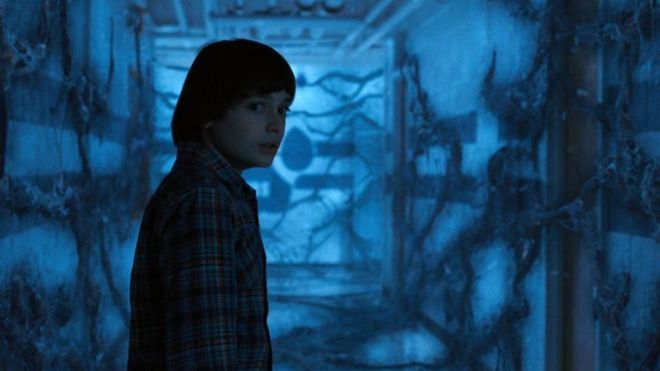
become, merely a link between the real world, and the metaphoric Upside Down of the

Internet?

This also relates to the idea of communications as discussed in Rodman’s Mass Media in a

Changing World. If the way we communicate varies, than so must our forms of expression,

and in this case, social media. No wonder Facebook seems outdated. Do we use the same

slang, word choice, or even trends as we did 15 years ago? Look at the trajectory of emojis

and emoticons over the years. The grammar of text also conveys various different things.

I might not choose to text my manager “LMAOOO cryinggg” with several expressive emojis

as I would to a close friend. Even the ways in which we express emojis convey our

emotions. If someone replies with short text messages, or even uses proper grammar, the

delivery of the message is completely different. How is “K” different from “Ok” and even

more different than “Okay?” And how have these differences formed over time and

generations? How might a 45 year old see this versus a 15 year old?

Ultimately, Facebook has changed in use and intent over its 15 year span. Whether this is

good or bad depends on so many factors, such as age, internet use, and personal opinion.

To me, Facebook has changed use over time to become more sinister in function. It is now

a mere ploy to gather information in hopes of turning a profit. It also festers unhealthy

relationships that once might have naturally formed or disintegrated. Social media generally

portrays relationships through rose-colored glasses. How can one navigate such

relationships through social media sites such as Facebook, or must the sites themselves

change?